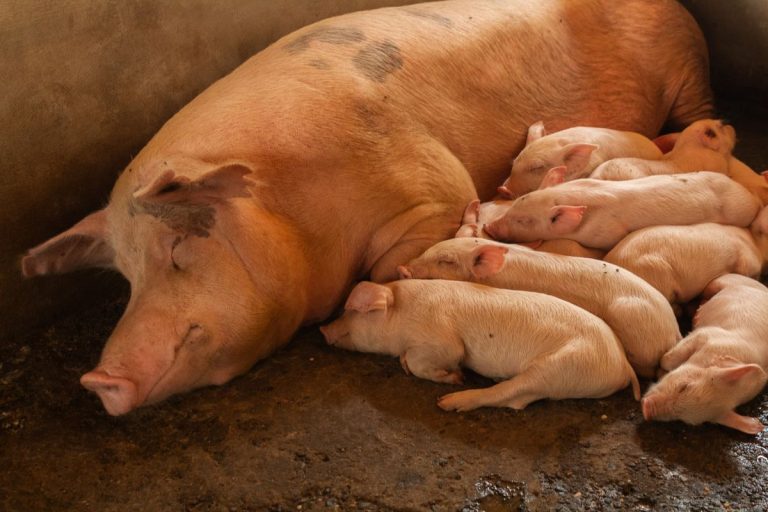


Raising pigs for meat is one of the most efficient ways to fill a freezer with homegrown pork, and it can be done on far less land than cattle or horses require. At Ray’s Livestock & Feed Store in Houston, we sell weaned feeder pigs to first-time owners every spring, and the questions are always similar: how much space do I need, what should I feed them, and how long until they’re ready for processing? This guide walks through the basics of raising pigs for meat.
Why Raise Pigs for Meat?
Pigs convert feed into meat efficiently and reach market weight faster than almost any other common livestock species, typically reaching 250 to 280 pounds in five to six months. Because most small-scale pig raisers only keep animals seasonally rather than year-round, the space and infrastructure commitment is often smaller than for cattle, sheep, or horses.
How Much Space Do Pigs Need?
A pair of feeder pigs can be raised in a pen as small as 200 to 400 square feet, though more space allows for rooting behavior and reduces mud buildup. Pigs are notorious diggers and will root up grass quickly, so many small farms use a dirt or gravel lot with a simple shelter rather than trying to maintain pasture.
Choosing the Right Breed
Breed choice affects growth rate, meat quality, and temperament, all of which matter for a beginner raising pigs for the first time.
Duroc
Our Duroc pigs are known for fast growth, good meat marbling, and a hardy, easygoing temperament, making them a favorite among first-time pig raisers.
Yorkshire
Our Yorkshire pigs are a lean, efficient breed known for large litters and fast growth, commonly used in both commercial and small-farm settings.
Browse our full pigs for sale selection to compare available breeds near Houston.
Housing and Fencing
Pigs need a dry shelter to escape rain and summer heat, along with sturdy fencing, since a determined pig can push through weak barriers. Woven wire, cattle panels, or electric fencing are all common choices. Mud wallows are actually beneficial in hot climates, helping pigs regulate body temperature since they cannot sweat effectively.
Feeding Your Pigs
Commercial hog feed formulated for the pig’s growth stage is the most reliable way to reach market weight efficiently, though many small farms supplement with garden scraps, spent grain, or produce as a treat rather than a primary feed source. Fresh water must be available at all times, since pigs drink significant amounts, especially in hot weather.
Basic Health Care
New pig owners should establish a relationship with a veterinarian familiar with swine, since pigs benefit from parasite control and, depending on how they will be used, certain vaccinations. According to USDA APHIS, basic biosecurity practices such as limiting visitor contact with your pigs and quarantining new animals can significantly reduce the risk of disease introduction on small farms.
How Much Does It Cost to Raise Pigs for Profit?
Costs include the feeder pigs themselves, feed for five to six months, fencing and shelter, and processing fees if you plan to have the meat professionally butchered. Many small-scale raisers find that raising two or more pigs together, and splitting processing costs with family or neighbors, improves the economics compared to raising just one.
Buying Your First Feeder Pigs
Look for feeder pigs that are active, bright-eyed, and free of coughing or visible illness, from a seller who can speak to their vaccination and weaning history. Our team at Ray’s Livestock & Feed Store can help first-time buyers select healthy feeder pigs. Visit our pigs for sale page or contact us with any questions.
Frequently Asked Questions
How many pigs should a beginner start with?
Most beginners start with two feeder pigs raised together, since pigs are social animals and a pair tends to grow better than a single pig raised alone.
How long does it take to raise a pig for meat?
Most feeder pigs reach market weight of 250 to 280 pounds in about five to six months from weaning, depending on breed and feeding program.
Do pigs need a lot of land?
No. Pigs can be raised on a relatively small, well-fenced lot with shelter, making them one of the more space-efficient meat animals for beginners with limited acreage.
Final Thoughts
Raising pigs for meat is an efficient, achievable project for beginners with even a small amount of land, offering a fast turnaround from purchase to freezer. Ready to get started? Browse our current livestock for sale or stop by Ray’s Livestock & Feed Store to find healthy feeder pigs for your farm.